Showing posts with label American Redstart Warbler. Show all posts

Wednesday, June 29, 2011

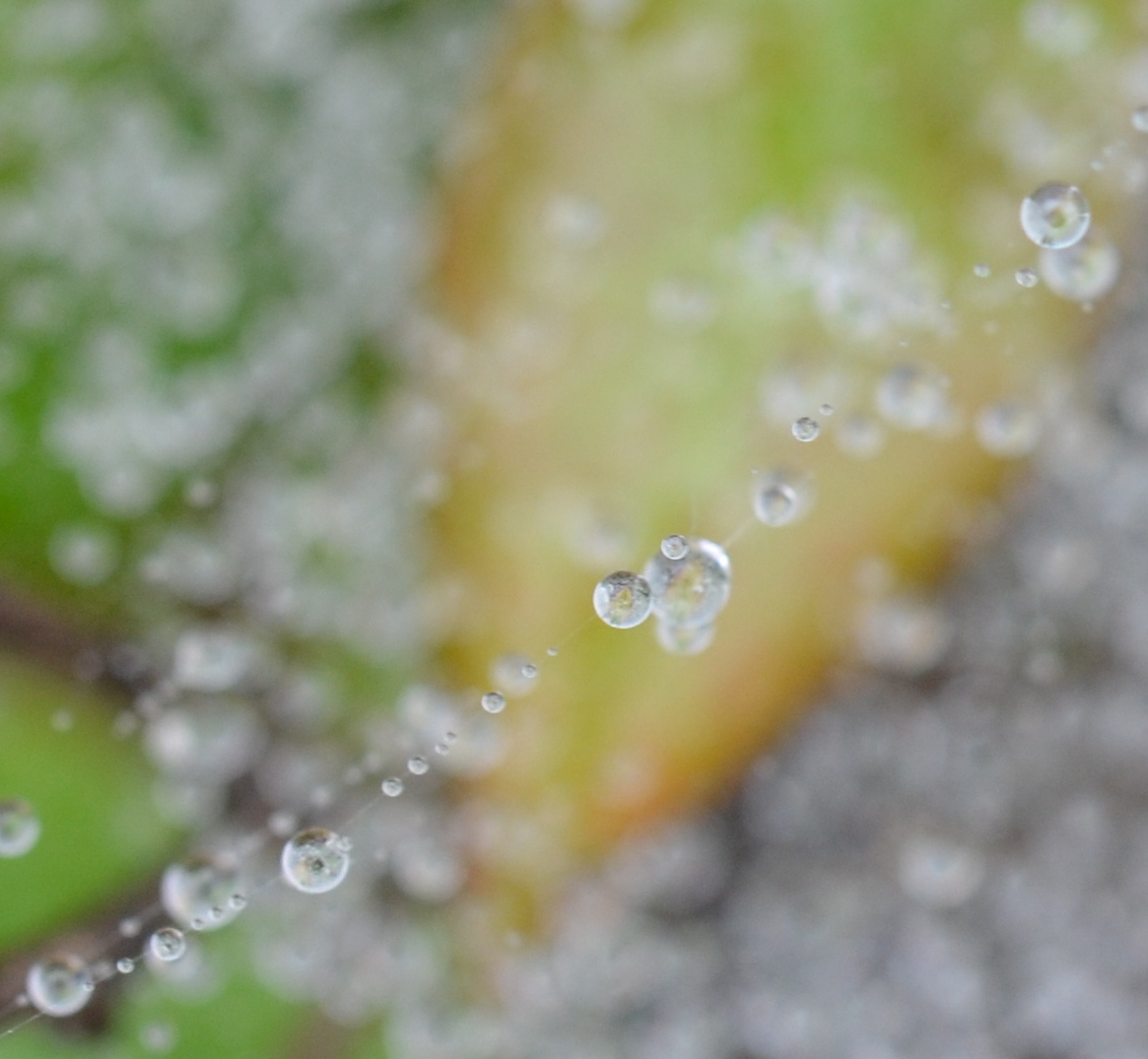
Watery Constellations Connections and American Redstart


Down into the woods
rivulets overflowing
forming round bubbles

Water orbs suspend
acrobats on woven webs
beauty in free fall

Warming trends are real
inspiring thought and action
scarcity and melt

Millions go without
precious drops essential drink
huge global crisis

Flashes of color
American Redstarts flit
bright ideas grow

How can we all help
all life depends on water
heart and mind open


Water flows freely and abundantly here . . .  from the sky and in our Flower Hill Farm woodlands. Early morning  jewels of dew and raindrops are inspiring and quench my creative thirst. I can also imagine how someone in other parts of the world might gather these drops to feed a desperate life thirst. Global warming and water scarcity are connected. You might enjoy this National Geographic link to learn more. 

The protection of our waterways from pesticides and other pollutants is fragile and always under attack. 

Did you know? On June 22, 2011 the
 "Senate Agriculture, Nutrition and Forestry Committee passed a bill (H.R. 872) that would limit the regulation of pesticides. The bill, which was introduced by Rep. Gibbs(R-OH) and had passed the House on 3/31, would exempt applications of pesticides to waterways from the Clean Water Act. More than 1,000 waterways in the United States are known to be impaired because of pesticide pollution. The only committee members to vote against the bill were Sen. Leahy (D-VT) and Sen. Gillibrand (D-NY). The bill now moves to the Senate floor, but Sen. Cardin (D-MD), chair of the Environment and Public Works Committee's water subcommittee, placed a hold on it. " From NRDC

You can call your representatives in Congress to demand full protection of our water. Hundreds of drops of rain and dew remind me of constellations or the milky way. I like to think of our actions as engaged citizens in that way too . . . we are many and can shine like stars in the minds of our family, friends and leaders. 

Water conservation is imperative in the larger picture and in our daily lives. 


Sunday, March 13, 2011

Birds in Review Part XXVI 'A Bird Parade' American Redstart With Surprise Spring Bonus


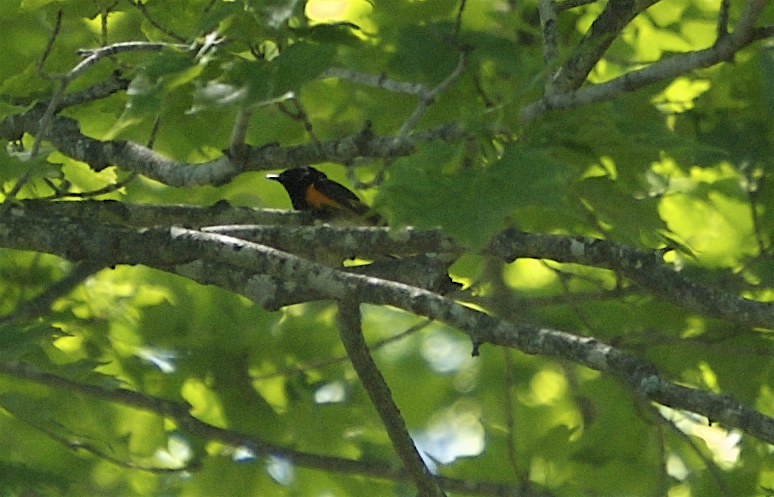
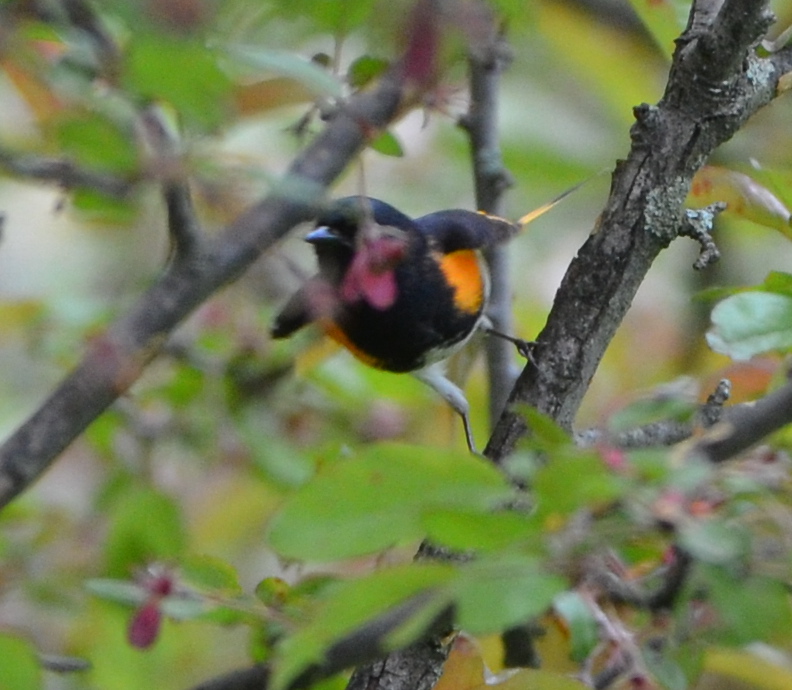
Continuing on with the promenade of Flower Hill Farm birds captured over the last two years . . .  allow me to introduce our resident American Redstart (Setophaga ruticilla). The male American Redstart flashes about the gardens and forest with his brilliantly painted tail fanning out then consuming confused and frightened insects. While working in the gardens, I will often catch a glimmer of his orange tail feathers glinting in nearby trees and shrubs.


Male American Redstart


Here is a good example of why I should go into my Metasequoia and clean out the dried dead twigs.

Male American Redstart

American Redstarts sing high pitched tweets, which are depicted by ornithologists as "Wee-see, wee-see, wee-see" or "tsee, tsee, tsee, tsee, tsway." When I hear and recognize his songs and calls, I will spin in all directions to espy the small black hooded warbler with splashes of reddish-yellow feathers about his body. Sometimes he stretches to espy me too!

Female American Redstart


The female wears a more dull gray coat with yellow trim. 


Female American Redstart

I identify this photo as a female American Redstart but it could be a immature male too. It takes two years for the male to produce his bold patterns of orange and black.  A young male may try to attract a mate but it is most unlikely he will succeed, until his plumage perfects its more colorful presentation during his second fall. He may become polygynous . . . perhaps he feels the need to make up for lost time . . . once his first female has a secure clutch, the American Redstart will find another territory and mate. He is a very energetic little songbird and perhaps it is not too much of a strain, to care for two mates and broods. 


An American Redstart coming so closely, allowing me to capture this portrait, was perhaps amazed and curious about my presence as well. I look forward again to eyeing their quick flashes of yellow-orange flitting by. Gardeners and birders in Florida, Georgia and parts of South and North Carolina may be seeing these songbirds migrating from Central and South America soon. Many neighboring states will have them as residents all through the breeding season. They breed over a wide range, covering a large area of the eastern and middle United States, all the way up into eastern and western parts of Canada.


Here in Western Massachusetts, we have a great way to escape the still chilling mantle of days by visiting  the Smith College Conservatory, where a splash of spring awaits! It was a special treat to step into a carefully assembled garden of spring bulbs simultaneously abloom! 


A glimpse into one section of the Smith College bulb show. These vibrant colors are such a healing tonic for the longing psyche. 


This morning there is a surge of song across the large sweeping sky above and spilling down into the landscape of Flower Hill Farm. Bluebirds are chirping to one another . . . especially the male, Robins are finding bits of bare earth to stealthy stalk, a Cardinal is singing his heart out towards his beloved, Mourning Doves are cooing and many of us are up an hour earlier, as we spring ahead into spring. The river below is raging and rushing over rocks . . . its unbridled roaring music is so alive and invigorating. Several seasonal streams that crisscross my land are churning up debris and layers of leaves of yesteryears. The sounds of gushing and flowing water makes my blood flow faster and energizes my winter tired soul. 

This is surely the most remarkable time of the year, when we stand before burgeoning rivulets and flourishing rebirth within the landscape. Trees are awakening, releasing vital energy via sap that rises from the lower protected cores, defying gravity as the life fluids race upwards towards tips of branches, soon to be swelling and bursting forth in buds and blooms. Our imaginations blossom to meet this renewal. Creative energy soars with the canopy of clouds and takes flight on wings of birds excited for the new season of promise and vigorous growth. Nature does not seem to be always kind and I know that for many there is a great struggle ahead . . .  be it due to natural disaster or inner depths of despair. I hope this coming spring may lighten loads and open new channels of love and creativity for all life. 
Our calendars may not say spring but nature is shouting it in many corners of the globe. The stirrings to our spirits and waking earth are a mid March occurrence that brings about a near smile to the stretching gardener preparing to be set free from frigid fasteners of winters grasp. We in the northeast are nearly free for the birds and waterways are singing so!


Friday, May 21, 2010

Returning Fullness of Green Bedecked in Bold Orange and Black!


Flower Hill is fully leafed out now and birds are busy nesting in all the trees and shrubs. The serpentine native Black Cherry between the birches is where the Orioles are nesting again.
The cluster plantings of shrubberies is a favorite for many songbirds.
A Baltimore Oriole calling out . . . his unique notations fill the garden. Deep smiles fill my heart for their return.


When not calling or helping his mate, he is busy gleaning here and there from the trees and shrubberies.
It is supposed that only the female weaves the nest, but I have seen on more than one occasion the male helping her out . . . rather like someone holding a skein of yarn for another to make it into a ball.
Weaving their nest almost in the exact location as last year amongst the blooming native Black Cherry blossoms. 'Michael's Tree' is out in an open field and is quite tall . . . just the sort of habitat Baltimore Orioles love.

What a feat! How do they learn to be so skilled in weaving . . . fascinating. The female is leaving to gather more materials no doubt. Her coloring is a bit more yellow orange.
All around these birds the gardens are moving into their purposes. Now the south garden focus of Wisteria, Viburnums and early Lilac blooms is fading into . . .
the weeping Japanese Maple and mid east gardens behind the house and barn studio.
The foliage hue is mirrored throughout this garden. My funky pink English Hawthorn is just fading. 
Miss Kim and the foliage of a Crabapple compliment the cut-leaf Japanese Maple's wine colored leaves. Japanese Tree Lilac in the background will soon be covered with clouds of white blooms. 
Miss Kim and other late blooming Lilacs not quite fully open . . . both were flattened by the heavy winter snow . . . Miss Kim proved the more supple. 
Todays wildlife colors of striking orange and black continue in the American Redstart, who is nesting in the Crabapple orchard. 
They dart about so much spreading their tail and wings to startle insects out from under leaves and such. It is very hard to get a shot like this one! This two year old is smaller than a goldfinch, while the Baltimore Oriole is about the size of a Robin. It takes two years for both males to attain their bold colors. This little fellow can be polygynous finding a second mate once the first is incubating her eggs.
Here the more subtle female . . . note the yellow coloring along her tail, side of breast and wings.
Look how camouflaged she is here.., the female and young are protected in this way. If you would like to hear their songs and learn more about these beautiful birds, visit 'All About Birds' .
To end our orange and black sharing or in this case more brown and red-orange. . .  a Red Admiral is still enjoying the fading Lilac blooms. Their caterpillars prefer to munch on nettle and will bring two leaves together to form an enclosure. I have read that they sometimes fly around at night.  I too love the night garden!
It is a great joy for me that the gardens are a habitat to so many birds and butterflies, though I worry for the flutterbys! I get as excited about their return . . .  as with any flowers I grow.
Related Posts with Thumbnails