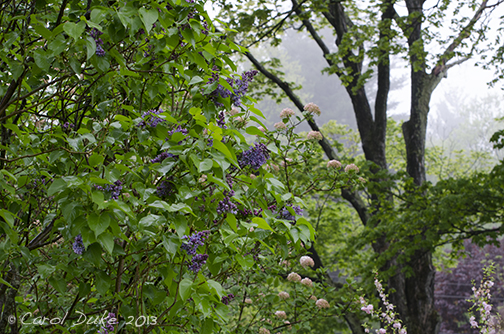
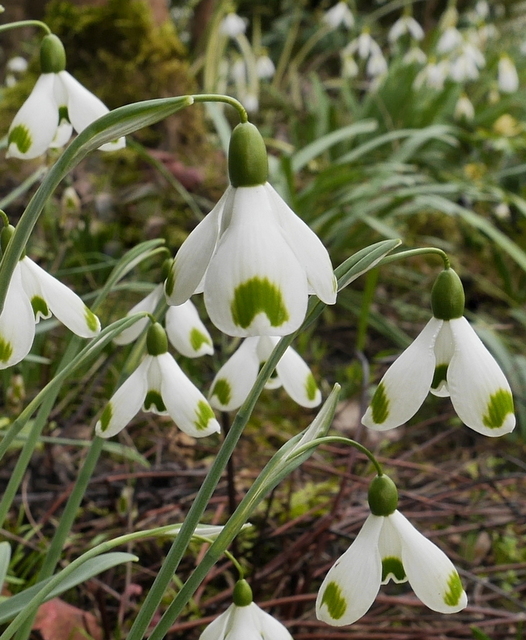
Spending a winter away last year has helped me appreciate the beauty of winter. Please visit my blog to learn more about why I love the winter landscape here at Flower Hill Farm Retreat. Happy Solstice and Best Wishes for the Holiday Season and New Year!
Showing posts with label Apple Trees. Show all posts
Wednesday, December 21, 2016
Tuesday, January 21, 2014
Winter Blues ~ Eastern-tailed Blue, Summer Azure and Silvery Blue
Dreaming of Blues fluttering around the garden can shake off the mantle-of-melancholy winter sometimes weaves about our spirits. Today, I gather some delightful, inspiring and tender butterfly encounters, from this past sizzling summer, and toss them on this page of white, that they may bring a ray of light, to warm the inner gardeners folded inside our longing souls.
Eastern Tailed-Blue Butterflies of 2013
The progeny of these gossamer-wings are now chrysalises, or caterpillars in the Eastern Tailed-Blue's case, tucked away in crevices within mossy mounds, pods of vetches and clover, or along the frozen winter ground. Little fragile beings within their sleepy pupa or larva state, without realizing their fate, without questioning, without knowing, without hoping to survive the onslaught of freeze and thaw, human flaws and sharp bird beaks, simply, sweetly sleep, waiting for transformation.
Summer Azure Butterflies of 2013
Silvery Blue Butterflies of 2013
Holding on throughout the bleak winter months, many new Blues will emerge, along with our gladdened hearts, into the warm breath of spring. I hope and imagine hundreds of butterflies surviving the numerous perils that come between them and their completed metamorphosis. Such gossamery treasures tickle emotions and call the caring mind to action in thoughtful ways towards their wellbeing. An added appreciation for subtleties in shades of blues and grays awakens this slothful painter, when gazing upon the pastel Blues.
Silvery Blue Butterflies of 2013
I love birds too and they enjoy all the stages of butterflies equally, especially at this lean time of year. No snow coverage is good news for this little Carolina Wren, who has decided to move in and live year round.
Wren and other bird beaks are perfect for lifting up the leaves and digging for larva nuggets below. Too bad for the butterflies being of the lower food chain, but then, butterflies fasten hundreds and hundreds of eggs to various host plants assuring there will always be trembling gossamer-wings to pollinate and touch our hearts. I say, always, but heedless humans do have a hand in the decline of butterflies of all kinds.
Foggy, frosty, winter morning sunrises are wondrous to behold just outside the windows and doors. I feel blessed to start the day in this inspiring way. A branch of the Mill River runs between the hill where Flower Hill Farm is situated and Carey Hill just due east, making for a great show of mist most every dawn. I am less excited about the sheet of wood smoke that is always more gray.
Millions of unique snowflakes fall, thickening a fleecy snow-blanket, sheltering tiny life. It is heart-warming to know of all the diverse, quiescent wildlife sleeping beneath the surface of snow in layers of detritus deeper below. In the dance of life, all is in limbo, uncertainties abound upon a blanketed earth.
Winter can be beautiful in its frozen snow-blossom way. Creating an ever changing wonderland with a great deal to explore, to ponder and exclaim about. It can soften the mind and loosen binding thoughts of gloom. If its beauty fails to lift our spirits, it may help to remember that the little Blues are placidly waiting too.
Wednesday, November 13, 2013
Vermilion Murmurs and Malus within a November Landscape
Cinnabar and Dragon blood come to mind when seeing the vibrant vermilion sprays of our middle garden Japanese Maple. Its blazing breath reaches over towards payne's gray shadows racing through the forested hills, we call Walnut Hill and High Ridge, creating a stunning contrast. Sturdy oaks still grasping their last burnt sienna leaves are nearly naked now. The Japanese Maple is as out of place in our landscape as an ancient Dracaena cinnabari might be, but it is a dormant dragon so lifting the spirit with its late and lasting fiery vibrance.
Viburnums have yet to let go of their purple leaves.
Cotinus, without the smoke, adds to the last of early November's crimson garden palette.
Another sleeping dragon rests just below the farmhouse in our weeping Cutleaf Japanese Maple.
Other reds in the gardens this November are juicy spheres by the hundreds . . . apples remaining on, or below, the apple trees. We have a variety of Malus senior citizens about the gardens and are thankful to those who planted the ever giving trees, one at least, over a century ago.
Sedum 'Autumn Joy' still wearing its burgundy tones before aforementioned century old apple tree.
A stream of free falls given a good wash make yummy apple sauce.
Weeping crabapple outside of the little studio offers a tangy feast for over wintering birds.
Our Metasequoia in the north field spreads out her russet plumes.
In the south field sumac brightens the fading countryside.
Wednesday, September 4, 2013
Stepping into September Haze Ironweed Holds Center Stage
August gave us cool days dressed in flannel and comforter nights . . . the coolest August I can recall since my transplanting to New England just thirty-eight years ago. Mostly busy days filled the weeks that passed in tones of green, with worldly guests and migrations stirring motes of dust, pollen and memories . . . both lived and dreamed.
The last hours of Augustus suddenly lead into September's first dawn . . . breaking through a thick haze of clouded air with bolts of zagged light only Zeus could throw around this old farmhouse. I was sure the power would go out or worse, but we were spared, this time, and when the new, once seventh, month took hold in a fresh day . . . the air was less heavy with only empty threats of lightning and downpours. Frightening storms floating off to the east . . . the air refreshed, and heaviness lifted, a page on the calendar is turned . . . and the small purple florets of Ironweed takes center stage in the middle meadow garden.
At last a Monarch settled long enough for me to catch its portrait whilst sipping from the teeny petals of Ironweed . . . this being only my second glimpse of a Monarch Butterfly in the garden, this year, so far.
Ironweed stately stands reaching nearly the eight-foot height of Joe-pye weed, adding a bright brush stroke of regal purple to the landscape painting. Touches of yellow come into play with Rudbeckia and Solidago.
Greater Spangled Fritilaries join in the feast of Ironweed.
One worn out from weeks of flight throughout August with a fresh Fritillary September emergence.
Autumn, but three weeks away, will paint the apples in deeper red hues.
By now, many of the bouncy snowballs of Annabelle's Hydrangea are carpeting the garden floor revealing the Tree Hydrangea beginning to blush in the background.
Viburnum seeds, nearly gone, have filled the bellies of Cedar Waxwings, Catbirds, Robins, Flickers and more resident Aves.
Though we miss the many songs and calls of birds, now gone or silent, Katydids and grasshoppers create such a cacophony between every blade of grass falling like a mysterious, musical mantle over the inky nights.
Not quite a violin, but there are actions within these wings striking together in atonal harmony.
Grasses cut a soft and feathery feel amongst green striking stalks . . . catching light while slicing through the canopy of sky, enveloping Flower Hill Farm, and tickling the muse of darkness.
September will summon silky tassels from within these taller Miscanthus greens.
This tiny, iridescent juvenile's parents have long begun their migration southward bound. I continue to delight in the antics and jewel-like presence of the young Ruby-throated Hummingbirds . . . though knowing they too will be parting soon. Enjoying the days with all the many treasures without clinging . . . knowing ephemeral joys are for moments only . . . we move with gratitude into September's ways.
Peace blossoms with justice . . . would that it could be alive in the hearts of all humankind. Our voices, pens and keyboards must be loud like the Katydids wing-songs filling congress and our president's mind with woe for what they may be about to sanction. Life is precious and fragile.
Wednesday, June 5, 2013
Bygone Lilac Time of May 2013
There are only about a dozen French lilac bushes here . . . some being quite large and of various cultivars. We also grow several Syringa vulgaris or common lilac shrubs, (which most other cultivars came from originally), as well as, the more delicate Persian lilacs and a few Korean lilacs. There are three late blooming 'Miss Canada' or Preston lilacs Syringa x prestoniae in bloom just outside from where I am writing now . . . luring many Eastern Tiger Swallowtails with their profuse pink blooms and filling my studio with their subtle, sweet perfume.
Every early lilac shrub, Crabapple and Apple tree bursts into bloom all at about the same time beginning around the second week of May. My photography focuses on specific shrubs and trees as seen from different perspectives. The lilacs are the last to be featured within our May gardens and panoramic landscapes.
Now, the lilac blossoms are turning brown and beginning to form seeds. The deciduous shrubs are being carefully pruned so that the plant does not waste energy forming seeds, and so as not to interfere with the newly forming buds for next spring.
A tour of the Bygone Lilacs . . .
In the upper garden just south of the farmhouse, we call our south gardens, standing near French lilacs . . . looking east over the top of our oldest Apple, towards Walnut Hill, Carey Hill and High Ridge.
From our second-level terraced garden of white French lilacs looking up towards the upper garden and purple French lilacs. I can only guess at the exact names of these cultivars for my records are shamefully lacking.
Still on the second-level terraced garden with the French lilacs, 'Bonsai' Apple (right) and Magnolia stellata (left) still holding a few blossoms . . . looking down towards the 'Gateway' Apples. The Apples are full blown, while the lilacs are just beginning.
Back in the upper garden looking east again towards Walnut Hill. You can see a bit of the purple Persian lilacs that also grow on the second-level terrace in our south gardens.
Looking northeast through lilacs, our oldest Apple . . . out towards a stately Oak and the forest edge.
French lilacs and viburnum before giant Rock Maple, as seen looking west towards the road.
Standing on the second-level terrace looking up and north towards the old farmhouse framed by two giant Rock Maples on a bright sunny day my camera offers another view of our French lilacs and viburnums.
Inside the upper garden again looking out in the direction of the old Rock Maples on a misty day the fully blown lilac blooms are a bit wet and heavy.
An Eastern Pine Elfin enjoys the lilacs too. The tiny butterfly is nectaring on Syringa vulgaris 'Alba'.
The same lilacs and viburnum as seen above looking up from the rock garden beneath the 'Bonsai' Apple.
Outside the upper garden a hedgerow of viburnums, lilac and the most willful wisteria stand before a Shagbark Hickory with a climbing hydrangea.
Fully opened blossoms.
Magnolia soulangeana before French lilacs standing more to the left of the hedgerow above.
The last image from the south gardens on the second-level terrace garden, which features Persian lilac topiaries.
Looking towards the north garden and wildflower field . . . from behind the farmhouse.
Moving out behind the barn studio.
The view from inside the barn studio looking east towards Walnut Hill.
Along the edge of the Crabapple Orchard a smaller Korean lilac 'Fairy-tale' just beginning above and fully open blooms below.
Though I feel my gardens are too big for me to manage even with help . . . especially with all the invasives I have to battle, I must confess that May is a most intoxicating and joyous month for the most part. This year we did not even have the bothersome black flies . . . mostly thanks to the early drought and the Tree Swallows.
It was glorious walking about the May gardens with all these delicious shrubberies in bloom. The Hawthorns Crataegus made their show after all the lilacs were spent. Now walking into June with countless wildflowers, roses, iris, poppies, peonies and more unfurling and promising . . . the garden is a constant theatre of form and color attracting this writer/gardener, as well as, a diversity of wildlife that adds so much more happiness . . . with exception to the rabbits and ticks.
HAPPY JUNE!
Subscribe to:
Posts (Atom)