It was on a cold gray day . . . very much like this day . . . exactly two years ago . . . I clicked 'Publish Post' and thus began this blog. This is my three hundred forty fourth post. You have honored me with six thousand two hundred sixty seven comments. I treasure each and every one of your thoughts, and all the dear people following Flower Hill Farm. Thank you for your continued support and the enduring inspiration you give through your gardens and words.
In honor of becoming two years old, I have given my blog an additional page. Just under my header photo, you will see Flower Hill Farm Beginnings and I have just added Media Scrapbook. These pages give more history and meaning to the creative process and stewardship of my land and gardens. The offshoots that have formed into small modestly profitable enterprises . . . in flower arranging, photography and a B&B Retreat . . . have allowed me the privilege of continuing to work with the land in creating this humble . . . yet magical . . . garden and habitat . . . for wondrous wildlife and gracious guests from around the world.
For the last thirty years, my life has truly been formed by the dirt on this hillside. It is hard to assimilate . . . to fully determine . . . if I am creating the garden or if the garden is creating me and the way my life has unfolded. The land has been my muse . . . my guiding light giving me a sense of place . . . of connectedness to a deeply cultivated part of my being . . . ever entwining with the intricacies and marvels of the natural world surrounding me. It is my duty and responsibility to be a wise and caring steward.
So I step into year three of blogging with equal joy and excitement . . . with a deeper understanding of why I am sharing my stories and love of this land. Thank you so for sharing the journey with me. It is remarkable to me that I can scroll down my blog list or visit Blotanical or Best Garden Blogs and discover countless, incredible people sharing their love of nature . . . then enter your worlds with a simple click. Knowing you all . . . has greatly enriched my life. You have given me hope . . . in times when it seemed there was little to hope for and inspiration when I most needed it. Gardeners the world over are pretty amazing folks! How lovely to connect across continents . . . often without a common language and with many cultural differences . . . which adds a richness to the tapestry . . . through our woven threads of mutual respect and love of gardening and wildlife.

And now . . . without further ado . . . allow me to introduce a lavish living bird feeder - Sambucus racemosa L. Red Elderberry. Her fruit is off the charts in favorites for Grey Catbirds and Cedar Waxwings. The Catbirds are frequently flying over to this shrub in animated anticipation, as soon as the buds begin to swell. A member of the Honeysuckle family, this Elderberry offers lovely, fluffy blooms in early spring.
The berries will disappear long before they might become red, for the Catbirds will work on the clusters at a frantic pace. I can never get a photo of the ripened fruit. The birds have planted a few other bushes around the gardens. I would love to have a hedgerow of them . . . then perhaps I might just get to see a few in their brilliant scarlet skin. To have many more would allow other birds to enjoy them as well, for the Catbirds are very greedy, when it comes to Elderberry fruit.
This little House Wren is not interested in the berries . . . unfortunately for the Chickadees . . . he is eyeing their little nest within an old replaced light hole that was carelessly left uncovered. A pair of Chickadees have enjoyed raising their young in the tiny hole for years. The year featured here, they grieved the loss of their babies for the Wren would not allow them to live. Nature can be so hard to understand sometimes.
Moving further south along the middle-terrace garden, a much beloved Magnolia stellata glows before a brightly lit Paper Birch. This dwarf variety is a lovely feature in this part of the garden. She is the first to bloom and is covered with a cloud of star-like, multi-petaled, snow-white blooms. Star Magnolia is another name often used when referring to this jewel of a tree.
A light fine brush stroke of pale pink graces each thin petal. The whorl seems to dance around the center crown . . . which holds a secret . . . beginning to form for feisty Flickers. There is a subtle sweetness lingering in the air around this unique and ancient flower. We are old friends, these twenty-five years, by now. A gift from Japan to these United States . . . an offering of peace. I transplanted this Magnolia and her sister, all those years ago, from a lovely, neighboring plantswoman's garden. She had become overwhelmed with the size of her garden and was selling many small specimens like these.
It is about this time of the stellata seed pod's growth Northern Flickers take notice.
They flock to the small tree and literally shake the stellata up, while harvesting these oval, orange fruits.
I saw a number of Flickers all over the Stellata last year and it was a startling sight, with sound effects as well . . . fluttering of wings against leaf! They were so quick and in such constant motion, that I could not capture any photos, but one. This beauty perches in the old apple, whose branches reach out towards the Magnolia stellata. It is rare for me to see the Flickers flocking in one tree this way. The fruit or seeds must be a tasty treat. The fact that I was lying in the hammock, trying to rest, made it all the more difficult to get any good photos. I had to pretend not to notice, so as not to frighten the Flickers off.
Fragrant and lanky English Hawthornes are lovely, spring-blooming trees. They are highly prized for their bountiful blossoms and generous crop of fruits in the summer and fall. Cedar Waxwings are particularly delighted with the fruit of Crataegus L. English Hawthorne, also known as Haws and thorn-apple.
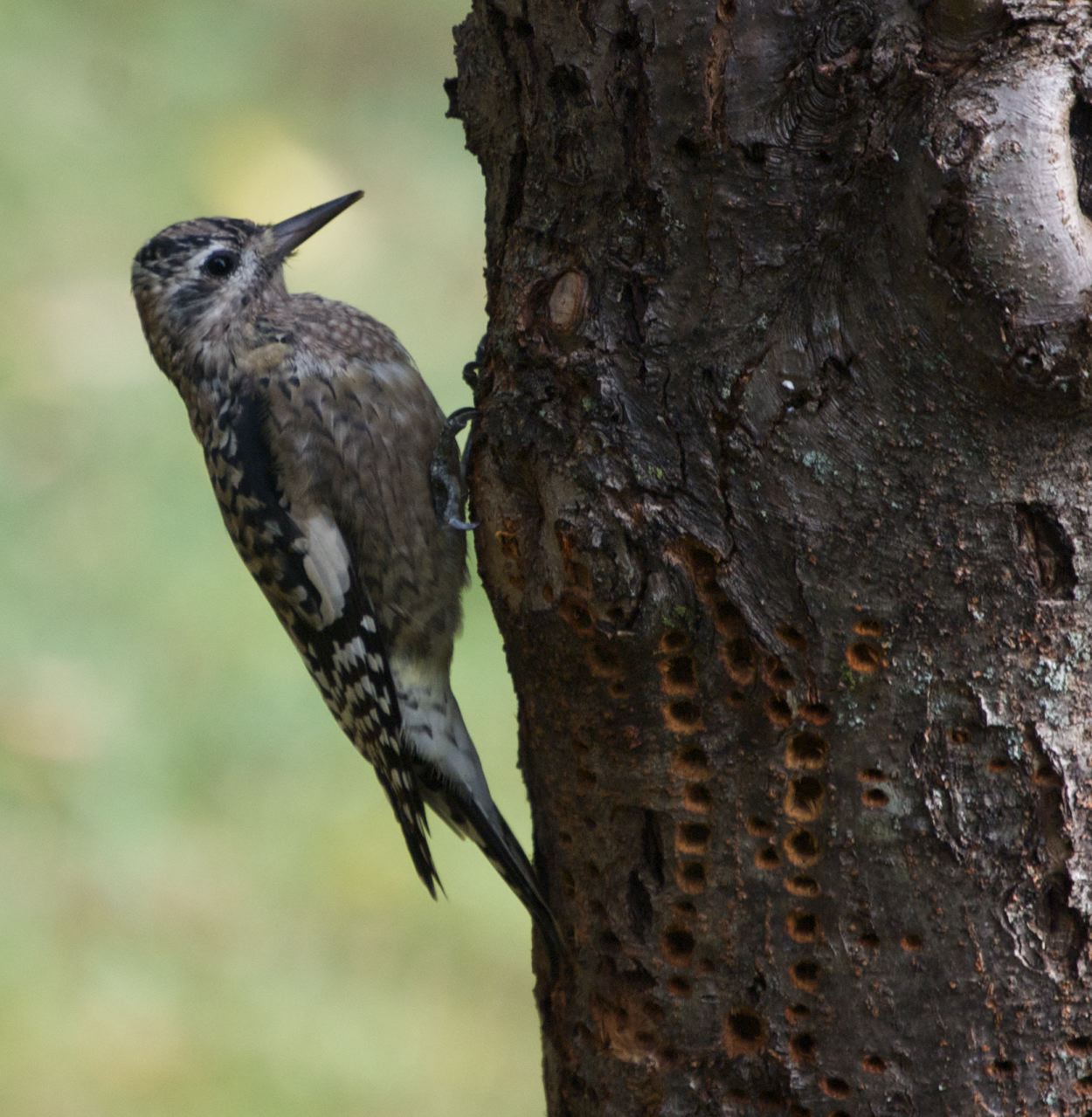
I am using this Crabapple trunk to illustrate what goes on constantly along that of the white and pink Hawthornes. The immature Yellow-bellied Sapsucker (thanks Randy!) loves to drill up and down the trunks of both trees belonging to the Rose family. After years of this, there does not seem to be any damage to the trees. I like to think that his beak work is a bit like tattoos, which so many seem to love these days. There is either sap or insects beneath the bark . . . inspiring this activity and offering nourishment for the woodpecker.
Profuse blooms attract countless, small insects that then entice many birds to comb the flowers for food.
A Chipping Sparrow has found a snack. Sometimes the birds remind me of large flowers, for they are so often within the Hawthorne blossoms, as this little guy here.
Hundreds of Honeybees visit the unfurling florets. Standing beside the tree, you would think the entire hive were there due the extreme buzzing volume.
Now is the time for the Cedar Waxwings to fill the trees, fetching the medicinal fruits. The English Hawthorne is another non-native but with attributes aplenty. The tree can live up to 400 years, reaching 25 feet and spreading nearly that distance. A great beauty and a fabulous feeder, just be careful for the sharp thorns, for they prick and hurt! I marvel at how a plant or tree makes a conscious effort to create thorns for defense. Our plant world is over flowing with remarkable creatures.
Just to give you an update . . . a pair of Bluebirds came by this morning for their breakfast on the fly. So dear!! Have a lovely week. THANK YOU again for making my two years of blogging so rewarding and memorable.