Showing posts with label Magnolia Warbler. Show all posts

Sunday, October 13, 2013

A Bestiary . . . Tales from a Wildlife Garden ~ Featuring Warblers


Time does have a way of falling away from us . . . and so it goes that for nearly two years now I have been writing about the beasts that abide in our wildlife habitat. 'A Bestiary . . . Tales from a Wildlife Garden' is now featuring songbirds with warblers being the focus of my cursor. Warblers are truly delightful birds and come and go with the changing seasons . . . leaving us each late summer and fall only to return every spring . . . their departures and arrivals help us mark time . . . beginnings and endings of growing seasons.

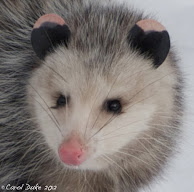
I would be honored if you clicked and scrolled over to Native Plants and Wildlife Gardens to see more images and learn a bit about these brilliantly marked birds. There are twenty-three installments in all but you can pick and choose which you might like to visit. Before the birds I did write about the mammals that roam around and about our twenty-one acres of forest, fields and gardens . . . not lions, tigers and bears but you can awaken bobcat, opossum and bears if you like. 


The labels below reveal the names of the six different warblers framed within this collage . . . perhaps you can match them up. Their little lives here at Flower Hill Farm so enrich my life and I do feel their absence both in the silence of songs and the stillness within the branches of trees and shrubberies. Revisiting our encounters through writing the Bestiary is a joyous way of recalling all of the remarkable wildlife I am so blessed to share this land with. There are more warblers, other songbirds then hummingbirds to write about before I move on to other beasties . . . like butterflies and bees.


Friday, May 13, 2011

Spring Stretching Towards the Sky Bird Return Update


Inside Top Garden Looking Northeast Lavender Lilacs and Yellow Oaks


Mighty Oaks Join the Chorus of Spring 


French Lilacs and Viburnums Outside the Top Garden Looking East


In the Blueberry Field Looking East/Northeast Towards Carey and Walnut Hill


Waving Weeping Cherry Towards Gray Birch


Old Apple and Gray Birch In Blueberry Field


Apple Gateway to Blueberry Field


Magnolias and Weeping Cherry


Middle Veggie Garden Viburnum Looking Towards Top Garden


Middle Garden Nest Box and Crabapples "Three Graces"


Looking Towards Crabapple Orchard and North Garden


South Field Looking East Towards Walnut Hill


Nest Box with a View


A Male Chestnut-sided Warbler has Returned!


Songs Fill the Garden Air


Magnolia Warblers are Back!


Common-yellow Throat Warblers Found Their Way Home Too!


Graceful Female Yellow-rumped Warbler Has Joined Her Mate

Male Baltimore Oriole and His Mate Below Returned a  Few Days Ago


Female Baltimore Oriole 


Cool days keep spring fresh
Yellow-green flowers dangle
Trees light up the hill

Sunlight catches form
Beauty blossoms, leaf and plumes
Billowing in air

Warbles, chirps and tweets
Crowning dawn with fluid joy
Symphony of song

Spring caresses love
All life swells with hope into-
Imagination 


Sunday, February 27, 2011

Birds in Review Part XX 'A Bird Parade' Yellow-rumped Warbler Plus One


While it is snowing out in my real world, I will turn back the pages of days, towards early spring and share another dear warbler that chooses to return each year to the gardens, fields and forest here. Every new spring day brings about more unfurling green and added bird songs . . . so much that it becomes like a symphony of warbles over the shrubs and trees and a challenge to single out and identify each one. It helps to catch a flash of color . . . a combination of marks that speak to a recognizable form. I can sometimes quickly recall a songbird, when seeing it flitter within the Viburnums or Hawthorne trees, such as the beautiful Yellow-rumped Warbler pictured here. The yellow markings are the most obvious clues. 


One interesting fact about Yellow-rumped Warblers (Dendroica coronata) is that they have a unique ability to digest the waxy coated fruit of bayberries (Myrica spp..) This gastrointestinal trait allows them to expand their wintering sites along the shores in Massachusetts, perhaps into Maine and further north in much of these United States, than one would expect to ever see a warbler in winter. You may even see them at your suet feeders. Formerly known as Myrtle warblers, now I fear too often called merely 'Yellow-rump', they will spend all of autumn, winter and very early spring feasting on bayberries. During most of the spring and summer months they are seen gleaning trees and shrubs for insects. 


Look carefully towards the center of the Viburnum. Do you see what I see? 


Though too far away to get a crisp portrait, I love this pastel-like image of the little masked Yellow-rumped Warbler. His markings are so striking in the spring and summer months. The dotted dabs of yellow plumage join together to form a perfect triangle. 


I wish I could insert a recording of the Yellow-rumped Warblers melodious trills right here.


Yellow-rumped Warbler

This capture portrays a bit of a bandit feeling and you can see how the Yellow-rumped Warbler can at a glance, sometimes be mistaken as the beautiful Magnolia Warbler (Dendroica magnolia) below.


Magnolia Warbler

Magnolia Warbler

Yellow, black and white feathers are seen in both the masked Magnolia and Yellow-rumped Warblers, but they are fashioned together, so to speak, in quite different ways. The stroke of white above and below the masked eyes can at first fool the observer. I am glad I had my camera nearby, when sighting this pretty male songbird, for it was the only time I have been lucky to catch a glimpse of a Magnolia Warbler. 
There is more to come in tones of yellows in the continuing 'Bird Parade.'

Meanwhile . . . 


Winter is still very much with us here in New England.


Robins, Cedar Waxwings and Chickadees are the only birds I have truly sighted today. I have not seen the Bluebirds or Titmice in a few days now. 
It is a great escape from the snow and ice, to look back over spring and summer photographs, finding the images I am sharing throughout my Bird Series posts. 

Related Posts with Thumbnails